
How to Launch a Custom-Branded Yoga Mat Line with Low MOQ (Under 100 Units)
1. The High-MOQ Trap in Traditional Yoga Mat Sourcing
If you have ever tried sourcing custom yoga mats on traditional B2B marketplaces, you are likely familiar with the standard factory response: "Minimum order 500 pieces per color, tooling fee $800, lead time 60 days."
For an independent studio owner or an emerging brand launching an online direct-to-consumer (D2C) store, tying up $15,000 to $25,000 in a single product run carries immense business risks:
- Capital Lockup: Funds that should be allocated toward customer acquisition and community marketing are frozen in warehouse inventory.
- Color & Aesthetic Risk: If your audience prefers sage green over terracotta, you are stuck with hundreds of unsold mats.
- Warehousing Friction: Storing 500 heavy, bulky yoga mats occupies significant floor space and incurs steep fulfillment fees.
In 2026, the global wellness equipment industry has shifted toward agile inventory models. By partnering with agile supply chain specialists like INNOV FITNESS SUPPLY, boutique brands can now test the market with small pilot runs, evaluate tactile feedback, and scale production seamlessly.
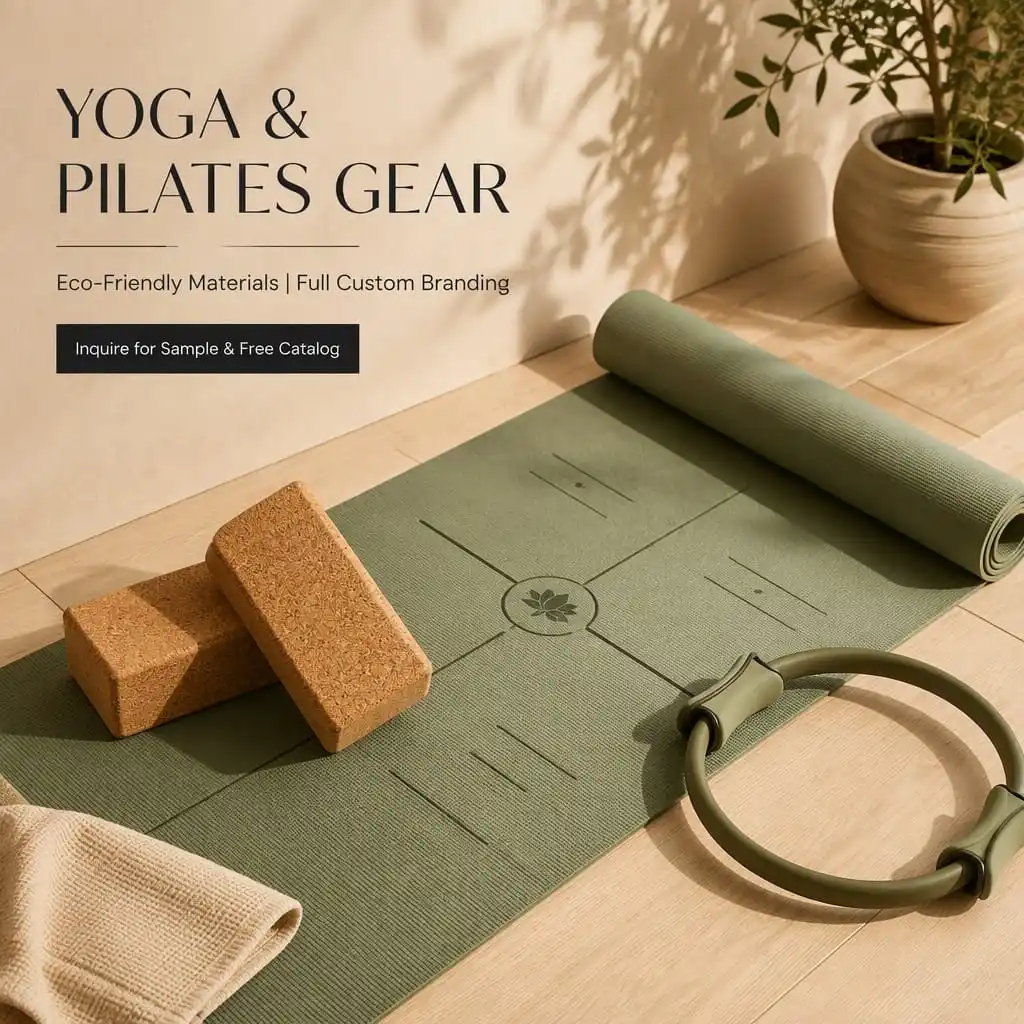
2. Material Selection: Why Boutique Studios Are Abandoning PVC
The single most critical factor in your yoga mat's reputation is material composition. Overseas commercial buyers and studio practitioners have become extremely sensitive to chemical odors, surface grip, and environmental impact.
| Material | Typical Cost | Grip Performance | Pros & Cons for B2B Brands |
|---|---|---|---|
| PVC (Vinyl) | Lowest ($) | Poor when sweaty | Cheap, but smells toxic, emits VOCs, and is widely rejected by modern boutique studios. |
| TPE (Thermoplastic) | Moderate ($$) | Good dry grip | Lightweight, recyclable, and odorless. Excellent for studio rental fleets and beginner lines. |
| Natural Rubber + Cork / PU | Premium ($$$) | Superior wet & dry | The gold standard in 2026. 100% biodegradable tree rubber base with anti-slip organic cork or moisture-wicking PU surface. Zero toxic odor, studio-grade durability. |
B2B Pro-Tip: If you are selling to high-end boutique studios or positioning your brand in the $80–$120 retail price tier, prioritize a 5mm thickness with a natural tree rubber base. It delivers optimal joint cushioning on hard studio floors while preventing the edges from curling during heated Vinyasa or Reformer sessions.
3. Custom Branding Tactics for Small Batches (Under 100 Units)
How do you achieve a luxury, retail-ready finish without incurring costly printing plates and mold setup fees? There are three primary branding techniques compatible with a 50-unit minimum:
Three Low-MOQ Branding Methods:
- Precision Laser Micro-Engraving: Best for organic cork and natural rubber mats. Digital vector files (AI or PDF) guide the laser to engrave your studio logo and alignment guidelines directly into the surface. Tooling cost: $0. Setup time: Instant.
- Eco-Friendly Water-Based Silk Screen: Ideal for single-color minimalist logos on TPE and PU mats. Provides crisp edge definition and withstands hundreds of disinfectant wipes.
- Woven & Silicone Edge Badges: A sewn-on silicone or woven fabric label on the corner of the mat elevates perceived value and reinforces brand identity.
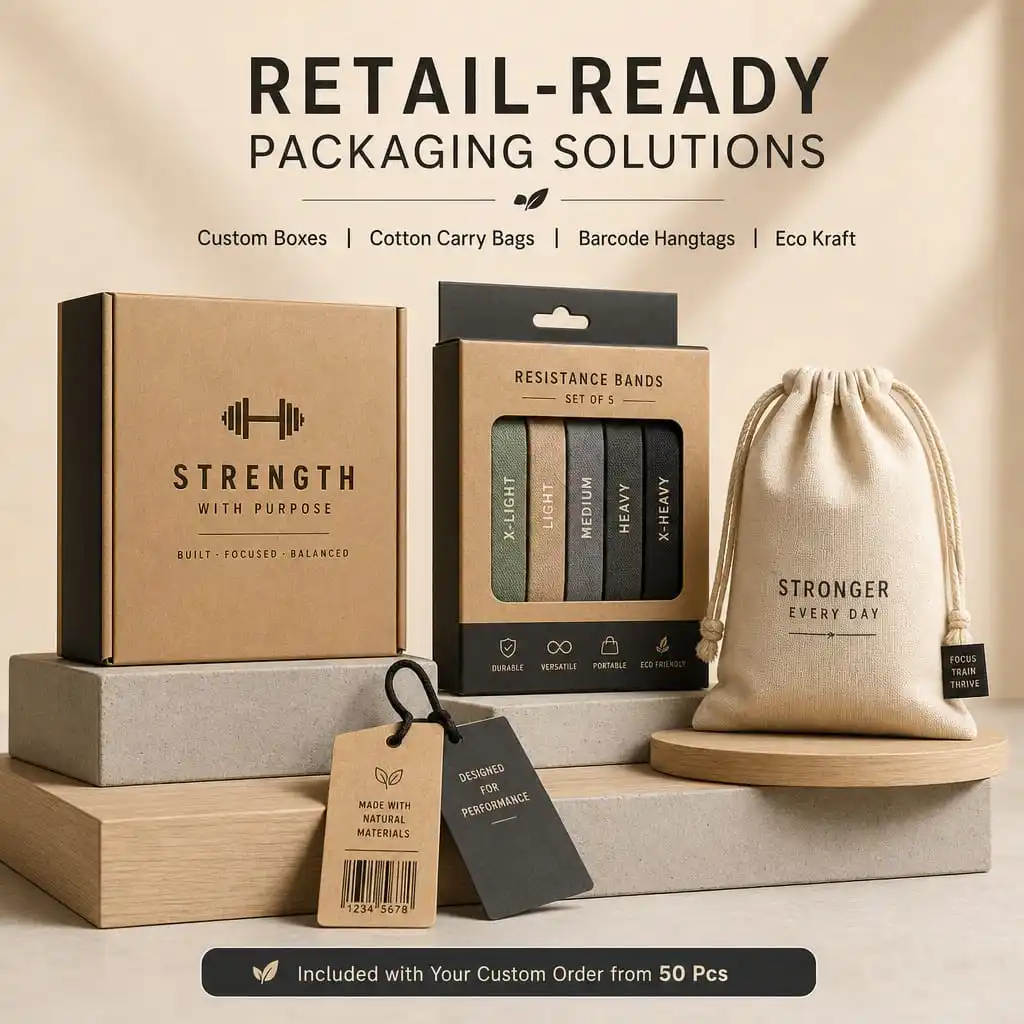
Beyond the mat itself, retail packaging is where customer loyalty is built. For orders of 50 units, INNOV FITNESS SUPPLY provides custom-branded carrying straps, woven cotton drawstring bags, and recycled kraft paper unboxing boxes complete with your barcode hangtags.
4. The 4-Step Sourcing Workflow: From Brief to Studio Delivery
Here is how a typical small-batch custom order moves from concept to your studio doorstep in 4 to 6 weeks:
Step 1: Brief Confirmation & Design Renderings (Day 1–2)
Send your vector logo and preferred Pantone color codes. Our sourcing specialists generate a 3D digital mockup illustrating logo placement, alignment line dimensions, and retail box artwork within 24 hours.
Step 2: Rapid Physical Sampling (Day 3–15)
Before launching full production, you receive a physical sample to test thickness, odor, tensile rebound, and grip. (Note: We provide sample evaluation with zero minimum order quantity; the buyer only covers courier shipping.)
Step 3: Pilot Batch Production & On-Site Quality Control (Weeks 2–4)
Upon sample approval, production begins across our audited partner facilities in Fujian and Zhejiang. Our team performs multi-point QC inspections: checking raw material compliance with EU REACH and RoHS standards, testing edge bonding, and verifying packaging integrity.
Step 4: Door-to-Door DDP Global Logistics (Weeks 4–6)
We manage export documentation, ocean/air cargo booking, and import customs clearance. Goods arrive directly at your studio, gym, or Amazon FBA / 3PL warehouse under DDP (Delivered Duty Paid) terms, eliminating surprise import fees.
Frequently Asked Questions by Importers
Can I start with just 1 sample before ordering 50 mats?
Yes. We have a strict zero-MOQ policy for initial evaluation samples. You can test a single custom-branded prototype to verify material density and print quality before committing to a commercial batch.
How do I know the materials won't emit toxic odors?
All partner facilities adhere strictly to CE, SGS, and EU REACH testing guidelines. We use natural tree rubber harvested sustainably, bonded without toxic glues, ensuring your mats smell fresh right out of the box.
Ready to Launch Your Custom Studio Line?
Explore our full Yoga & Pilates portfolio or speak directly with our Fuzhou sourcing team to receive a transparent quotation within 24 hours.
